
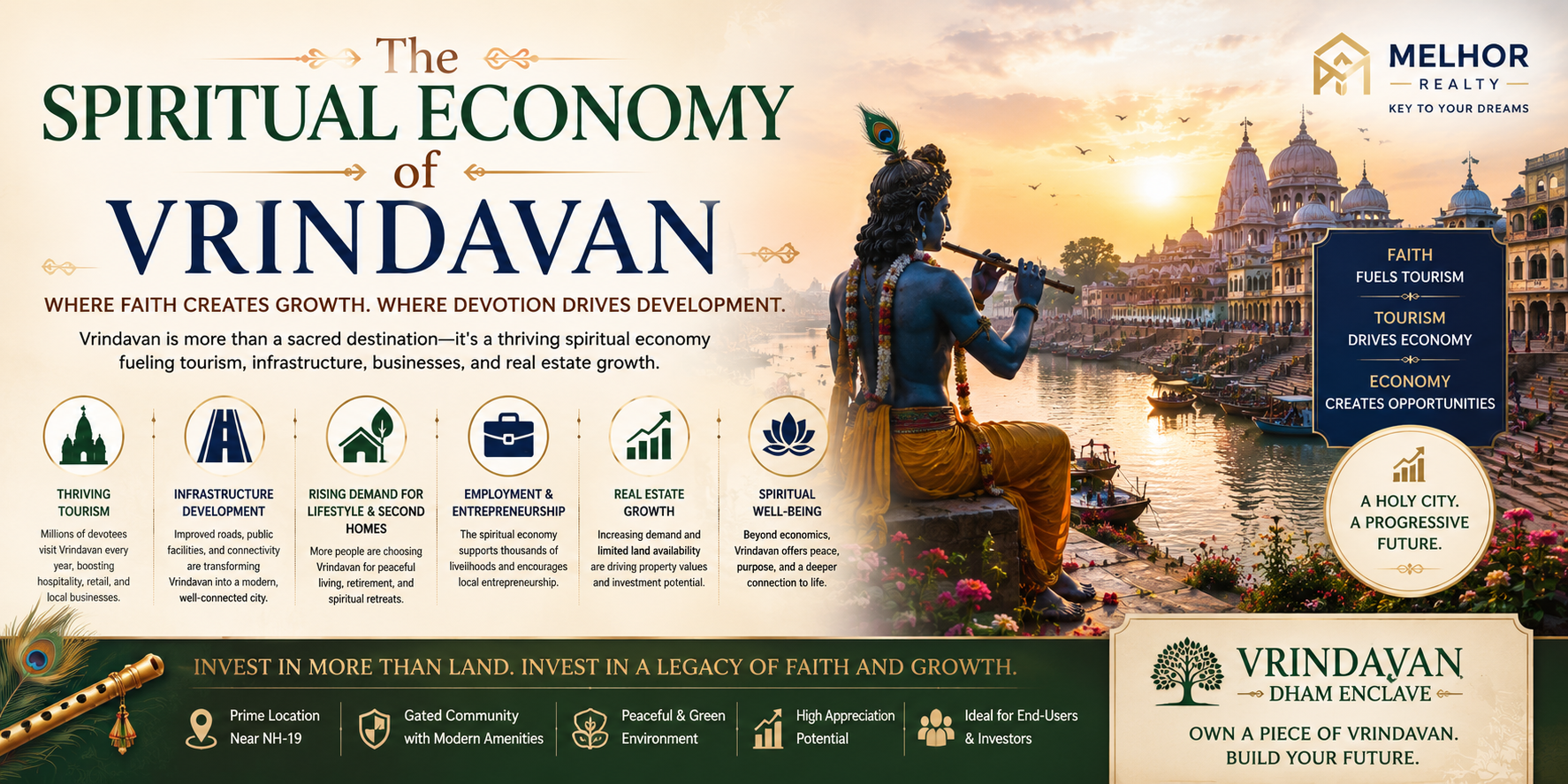
Understanding the Rise of Vrindavan’s Spiritual Economy
Vrindavan, the sacred land associated with the divine pastimes of Lord Krishna, has been a center of faith and devotion for centuries. Every year, millions of pilgrims visit this holy city seeking spiritual fulfillment and cultural experiences. However, beyond its religious importance, Vrindavan is now emerging as a powerful example of a spiritual economy—an economic ecosystem driven by faith-based tourism, infrastructure development, and growing investment opportunities.
Today, the spiritual economy of Vrindavan is transforming the city’s landscape, creating new avenues for businesses, employment, and real estate growth.
What is a Spiritual Economy?
A spiritual economy refers to the economic activities generated around religious and spiritual destinations. These include tourism, hospitality, transportation, retail, wellness services, real estate, and infrastructure development.
Cities such as Varanasi, Tirupati, Ayodhya, and Vrindavan have demonstrated how spirituality can act as a catalyst for economic progress while preserving cultural heritage.
In Vrindavan, the constant influx of devotees supports a thriving local economy and contributes significantly to the region’s long-term development.
The Growth Drivers Behind Vrindavan’s Spiritual Economy
1. Rising Pilgrimage Tourism
Vrindavan attracts devotees from across India and around the world throughout the year. Major festivals such as Janmashtami, Holi, and Radhashtami witness an extraordinary increase in visitor numbers.
This steady flow of pilgrims creates demand for accommodation, dining, transportation, and various support services, strengthening the local economy.
2. Infrastructure Development
Government initiatives aimed at improving roads, public facilities, and tourist infrastructure are reshaping Vrindavan into a more accessible and organized city.
Enhanced connectivity through the Delhi–Agra corridor (NH-19) has made Vrindavan increasingly attractive to both visitors and investors.
Improved infrastructure often acts as a strong indicator of future economic growth and real estate appreciation.
3. Demand for Spiritual Retreats and Second Homes
Modern lifestyles have increased the desire for peaceful environments where individuals can reconnect with themselves and their values.
Vrindavan offers a unique opportunity to own a home in a spiritually enriching environment. As a result, demand for residential plots, retirement homes, and weekend residences has grown steadily in recent years.
4. Employment and Local Entrepreneurship
The spiritual economy supports thousands of livelihoods through hotels, guest houses, local markets, tour services, handicrafts, wellness centers, and community-based enterprises.
This economic activity contributes to sustained regional growth and improved living standards.
The Impact on Real Estate
As spiritual tourism continues to expand, Vrindavan’s real estate market has evolved alongside it. Investors increasingly recognize the city’s potential as both a lifestyle destination and a high-growth investment corridor.
Premium plotted developments, in particular, have gained popularity because they offer:
- Complete ownership of land
- Flexibility in construction planning
- Lower maintenance obligations
- Long-term appreciation potential
- Opportunities for future residential development
Vrindavan Dham Enclave: Investing in the Future of Spiritual Living
Projects like Vrindavan Dham Enclave represent the intersection of spirituality and modern living. Strategically located with excellent connectivity, the project provides investors and homebuyers with an opportunity to become part of Vrindavan’s growth story.
For those seeking a retirement destination, a second home, or a long-term investment, Vrindavan Dham Enclave offers the advantages of planned infrastructure within a city that continues to flourish through its spiritual economy.
As Vrindavan develops into a more organized and accessible destination, early investors stand to benefit from both emotional satisfaction and financial growth.
Conclusion
Vrindavan’s spiritual significance has remained unchanged for centuries, but its economic landscape is evolving rapidly. The city’s spiritual economy is creating opportunities across multiple sectors while maintaining its cultural and religious identity.
For investors, this transformation presents a unique proposition: the chance to participate in a growth story rooted in faith, heritage, and sustainable development.
Whether you are looking for a meaningful lifestyle investment or exploring high-potential real estate opportunities, Vrindavan offers a rare combination of spiritual richness and economic promise. In this evolving ecosystem, developments like Vrindavan Dham Enclave provide a gateway to becoming part of one of India’s most inspiring growth narratives.